Showing posts with label #short mystery fiction. Show all posts

Monday, September 30, 2013

Man Up to Your Lazy Ways - Writing Short

After reading through many contest entries, I began seeing the same mistakes being made again and again by the writers of short stories wondering why they never win. Or, maybe they come close but can’t quite get there. There are plenty of craft books that will teach you all the elements of good writing, short story writing and mystery story crafting but most people just jump right in and think they can whip out a short story. Much like running a race without warming up first. This is my perspective without a lot of fluff.

Sometimes the path of learning is making the mistake—then seeing what you did wrong so you don’t keep doing it. The important part of that is the “seeing” part, understanding the what you did wrong part—acknowledging it. It would be nice to be told what to do and just do it, but unfortunately as human beings we can be a stubborn species. In Part I we began this process of what not to do. Today we have a little of what to do, concentrating on mystery and suspense.


Part II

      Tell the story – story first, writing second
Some people are plotters (they lay out the story ahead of time) and some pantsers (they write by the seat of their pants—whenever and however it comes). Whichever you are, you still will need to lay the story out in a planned format eventually (or you don’t have a story).

Pantsers lean heavily on being inspired and that can be a good thing if you hold what inspires you in front like a carrot to get your story down. It can be the element that shines through and makes it a winner. But eventually you need to pull it together. Think of it as the bones of the story. Be clear on these points and you will be less likely to get distracted or side-tracked—wandering down that yellow brick road getting distracted by the non-essentials. Build flesh on the story bones (without a lot of unnecessary fat). And who doesn’t love that?

When writing a mystery (or suspense). You will need to decide:
1.      What is the crime (or suspenseful incident)?
2.      Against whom (victim)?
3.      Why was this done (motive)?
4.      How (by what means)?
5.      By whom? (antagonist)
6.      Who reveals the crime, or triumphs in sorting out the suspense (protagonist).

Important to keep in mind: 

  • The hook: up the ratings on your story with a good hook. The hook is the first few sentences or paragraphs that draw the reader right into the fictive dream, without breaking his attention (with an info dump), so the reader wants to know what happens next. It is the appetizer or aperitif that whets the appetite and draws the reader right into STORY (See Part I, A).
It doesn’t have to be some car chase or explosion—any over-the-top action, but it must capture the imagination. Take some time reading first pages of successful short stories, and source out what makes them work so effectively. That will be time well spent.

To be fair, what works for some will not work for all because of subjective reasons—we are not all interested in the same stuff. But, if you can find that commonality we are all interested in, you will rock it.

  • Who discovers the crime? Under what circumstances? (your protagonist? A side-kick? A stranger who ends up important in the story?)
By the way—all characters in a short story should only be there only if there is a need for them to be there. They tend to clutter the landscape if they are not essential to the story.) You can’t have ten people on page one of a short story. We don’t have time to get to know them as we do in a novel, so eliminate them, or don’t give them names and let them be part of the scenery.

  • What clues point to the doer of the deed (or reason for the problem in suspense)? (you must sprinkle carefully throughout and not slam us with an ending we could not foresee coming) Readers of mystery want to figure out the puzzle part and you will fail if you don't provide the clues. The suspense reader wants to remain on the edge and needs clues to keep the suspense alive.
  • Who uncovers/reveals the connections? Why that person? (part of the puzzle or the suspense?)
  • The tie-up. A nice bow at the end to tie up your story can be very effective—corresponding to the hook at the beginning if well done. It can be a twist or the unexpected for greater impact.


The fastest way to learn these tips is to study good short stories. Take the bones apart and see them in isolated pieces (the hook, the ending, track the mystery, the clues, the characters). If you take the time to do this you will quickly learn to effectively write these elements into your story. A short story is not a novel in short form. Get familiar with the form to be effective.


Learn what you are doing wrong or not doing effectively. Man up and admit you can't get away with lazy writing.


Have I missed some important piece? Do you study short stories to see why they work or don't work?


Monday, September 23, 2013

Why Can't I Get My Short Story Published?

    Short Story Fiction
Part I

After having run a short story contest and read dozens of short story entries through the years, I keep seeing the same mistakes being made over and over. I decided to do a series of articles pointing out the big things that keep people from developing as a writer of short stories and share tips on what a good short story should and should not include.
I shared the dais with Ed Hock (well-known writer for Ellery Queen Magazine) on a short story panel at Left Coast Crime a few years back, won several short story contests and been published in short story anthologies. I certainly don’t think of myself as an expert, but after reading so many short story contest entries, I thought I could share some tips that might help you be more successful.
Whether you are trying to win a contest, or get your short story published, these will up your odds greatly. There is always the subjective element to contest judging and what a publisher leans toward for their platform, but if you have met all the guidelines and your theme is what is asked for, these will up your chances that you will be published or place in the top tier of a contest.
There are no quick to-do’s to accomplish success. But if you are serious about your writing and want to learn to write a good short story, follow these tips for success.
A.     One thing to remember above all else: STORY IS KING. Concentrate on being a good storyteller. It is the premier ability—not how cleverly you write, your beautiful prose or if you have all the commas in the right place (I know I'm going to catch some flak for that one). STORY is what people want to read. They want to be transported and enchanted, not preached at or bogged down by your beautiful or clever words.
B.     Don’t fall in love with your own cleverness.
This is a continuation of A. above. Fancy wording or phrasing is an intrusion into the story and often distracts, if it does not outright kill it. Beautiful prose is a good thing, but not if it interferes with the STORY.
“If it sounds like writing, I re-write it.” Elmore Leonard

Watch the cutesy ideas - some people love to be clever, they come up with cute scenarios or characters or dialogue to the detriment of STORY. They can be too clever for their own good—or the good of the story. Don’t get caught up in trying to be clever and have it come off silly. That is best left to the comedians, not the story tellers (unless you are a comedic storyteller). Though some pull it off, you probably won’t. So make sure the images you are painting are cogent and not silly.
C.    Keep your eye on the ball
When writing a fictional short story you should have only one idea. Don’t include more than the story needs. Don’t ruin your story with a political or social agenda that preaches. It can be spice but should not be a main ingredient. Write a non-fiction essay if that subject is important to you. Just like too much back story, it kills the momentum.
“You do not have to explain every single drop of water contained in a rain barrel. You have to explain one drop—H2O. The reader will get it.”
—George Singleton
So often when I start reading a short story, I almost immediately get hit with a back story info dump. When you want to fill in the reader with a bit of interesting past that you think the reader will be as fascinated with as you are, STOP. If not intrinsic to the story, don’t put it in. It should be directly related to the telling of the story and be integrated artfully, not dumped.
Again—as a reader, I ask, “Do I want to wade through this to read on?” If this information interrupts the flow of the story, I may decide it is not worth it. I want a story, not a history lesson or details of a character's past that I don't need to know. Only layer in what is necessary, when it is necessary.
The reader decides how much patience they have to wait for you to get back into the story. Sometimes the story picks up again relatively quickly and I continue, but sometimes not and I don’t read on. Don’t get lost along the yellow brick road, wandering around pointing out all the interesting things; being distracted by the flying monkeys.
D.    Be sequential  - Don't get your shorts in a bunch.
Keep things in order. Keep your feet moving forward while walking on the earth.
Some writers who are good with prose, stringing together events or ideas in what they think is a nice flow, but they are not sequential in how things happen in space and time. This throws the reader off, taking him out of the moment. Lay out the phrases in a sequential order. Don’t jump back and forth with information. 
Example of distracting structure: (D) Jane tentatively entered the room (B) after suffocating in the closet (A) all afternoon (C) waiting for the intruders to leave. 
Try instead: (A) All afternoon Jane had (B) suffocated in that damn closet (C) waiting for the intruders to leave before she grew brave enough to (D) open the door and ease out. 

Easier to follow when laid out in the order it happened. (A,B,C,D)
If the reader ends up having to re-read your last sentence or two—or five, to get clear on what you just said--to get back on the path you have distracted him off of, he may give up. Remember, one foot in front of the other along the yellow brick road.
And it is better and more interesting to have a variety of sentence lengths to keep the interest going, rather than lo-o-o-ng phrases strung together so we forget what the beginning of that sentence was about. Distracting!

Writing is changing. Structures that may have worked in years past are quickly becoming stagnant. Readers want to read faster, to the point, without a lot of unnecessary words. If you are writing a short story, especially a short short, say it and move on. 

Unlike writing a novel, short stories should be concise and to the point.

Any questions? Maybe you disagree. Put them in the comments and let's discuss it.

More to chew on next post--including writing for mystery/suspense contests.                                                            


Monday, February 6, 2012

Writing 101 – Is Your Fiction Writing Any Good?


What experience have you had with fiction? Have you taken fiction writing classes? Do you have a critique group that tells you your writing is wonderful? Well, test it before writing that novel, or, test it while writing that novel.

In my experience, I have found short story writing an excellent way to sharpen writing skills. And what better way to evaluate what you have learned than by writing for a short story contest. Contests give you a word limit which helps you tighten up your verbosity—chop out non-essential words—and then chop out even more. You quickly learn to axe those beloved adverbs and adjectives when you have to count every word.

Some say they can’t write short stories. Why? Because they're long winded? Because they don’t want to let go of the adjectives? Because they can’t think small? It is an excellent way to challenge yourself as a writer.

If you decide to give it a try, where do you find those contests? And more important, how do you choose the right ones for you. Some of my fellow writers don’t agree with me on this, but I won’t submit to a contest where I don’t get something in return. I strongly believe an author deserves to get paid for his/her work—especially if someone else is going to gain from it. Some contests are seeking stories to be included in an anthology, some are for monetary gain (usually small amounts, but not always), some are for a trophy or certificate.

I think if there is a local writing club or organization that is having a contest for a certificate, it is fine to begin there (you can always use that story again later).

When our small group of writers decided to find contests and submit, we used the term guerilla marketing coined by Sunny Frazier (see a few articles back for Sunny’s guest post: http://coraramos-cora.blogspot.com/2012/01/whats-your-genre.html. Now the term has morphed into other meanings. After we had been to several conferences/conventions and talked on panels, another author wrote a book with that title. I don't think that book was about short stories, but it certainly expresses the way to individually approach short story contest writing and submitting (commitment, consistency, aggressively apply to contests, continue to improve, don't give up, etc.)


It was quite effective to think about attacking short story writing contests with a guerilla mentality. We met together and charted our progress and successes like a horse race (we actually used a progress board with our individual horses showing our progress). We shared contest information, listed our contest attempts and celebrated our successes when published.

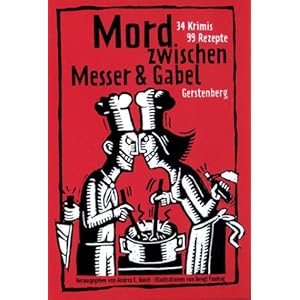
Mord zwischen Messer und Gabel. 34 Krimis, 99 RezepteOne of my early wins was for inclusion in an anthology of short stories of culinary crime created by members of Sisters in Crime in Germany, translated as Murder Between Knife and Fork (Andrea Busch). For years, that anthology was reissued and when I met Andrea at a Bouchercon Convention (http://bouchercon2012.com/), she shared that she read my story at dinner readings in restaurants throughout Germany, always with great reception. 

That one story taught me a great lesson, although it was only about 600 words. Small does not mean menial. It can have great value to your self esteem. I did continue to get residuals on that story for years—not enough to retire on, ha!—but certainly enough to build my self confidence as a writer.

Next time on part 2 of Writing 101 I will talk on how to choose a short story contest right for you and how to avoid pitfalls. Meanwhile, here are some sites on writing short fiction and some contests to check out:


Writer’s Digest Annual Writing Contest—deadline May 1st

Elaine Pillay host to Anthony Ehlersshort story writer from South Africa. http://elainepillay.wordpress.com/2011/09/19/short-story-writing-tips-for-the-essential-voice-competition/

Kate Thornton-Writing the Mystery Short Story

Short Mystery Fiction Society

Coppola’s Zoetrope--All story short story contests:

10 best short stories of all time

Anybody out there knows about the law? Here’s a good legal fiction contest coming up in March—judged by major authors:


For those who aren't writing short stories, visit Kristen Lamb's blog for really great advice on completing your novel and avoiding the pitfalls of a critique group: http://warriorwriters.wordpress.com/2012/02/06/a-new-approach-to-a-traditional-group-the-concept-critique/


Have you written/submitted to short story contests? Share what you gained from the experience?